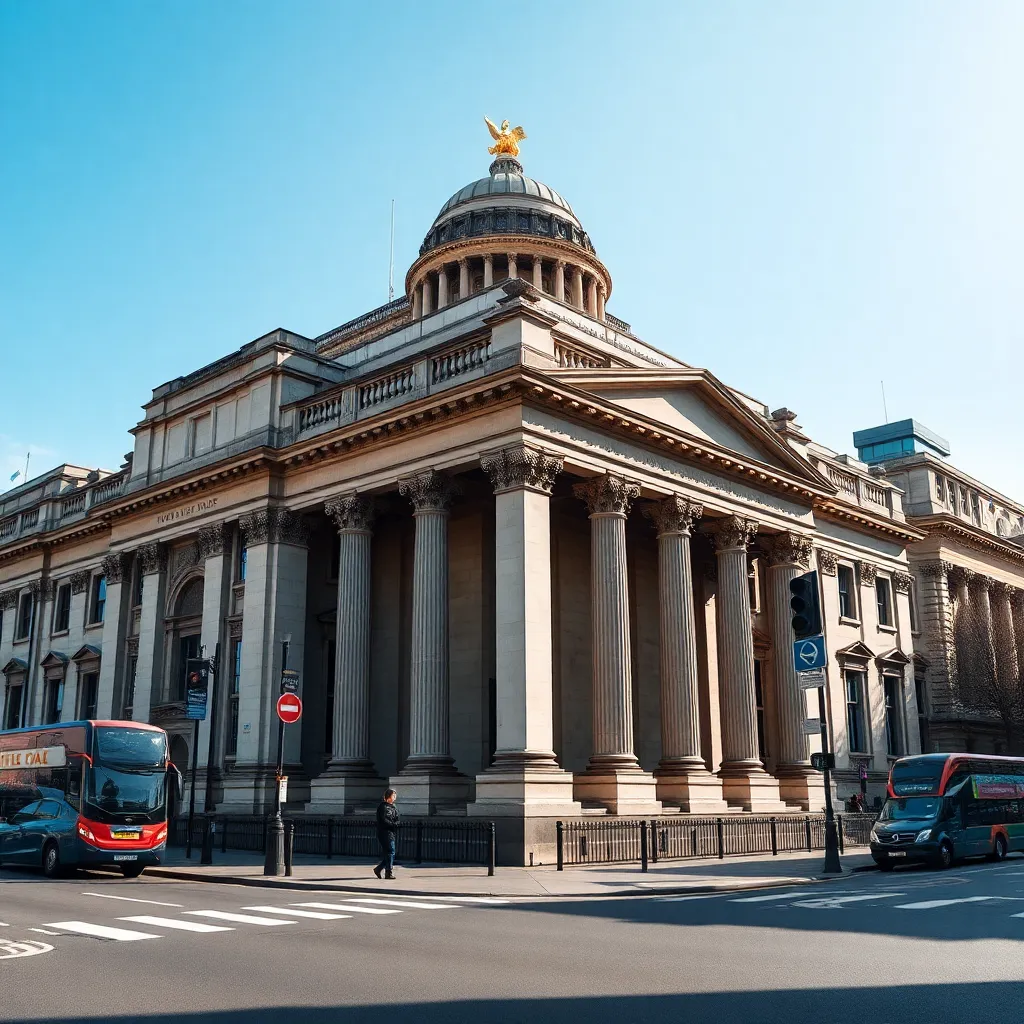
Bank of England’s Transformation: Demolition and Rebirth
The Bank of England underwent a dramatic transformation in the 1920s and 1930s. Sir John Soane’s original 18th-century building, described as “the pride and boast of my life,” was largely demolished to accommodate Herbert Baker‘s new design. This decision, deemed “the greatest architectural crime” by Nikolaus Pevsner, was driven by the need for more space. The demolition, vividly documented in photographs resembling Joseph Michael Gandy’s romantic ruin paintings, left only the outer facade of Soane’s work. Baker’s neoclassical replacement featured Greek-inspired elements, including Corinthian columns and pediments, along with stunning mosaics by Boris Anrep and sculptures by Charles Wheeler, including the iconic Britannia. The exhibition “Building the Bank – 100 years on” at the Bank of England Museum (September 2025-Spring 2027) commemorates this pivotal period, showcasing architectural plans, models, artworks from the demolition and construction, and offering tours exploring the Bank’s 300-year history. The museum also features a Soane Stock Office reproduction, highlighting the contrast between the old and new while preserving elements of Soane’s legacy.

(Source: https://londonist.com/london/history/bank-of-england-demolition-construction-1920s)